
How it works
What you get, and how it is made
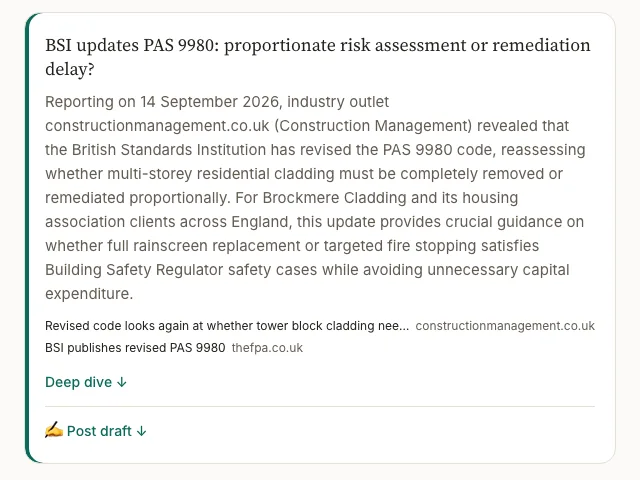
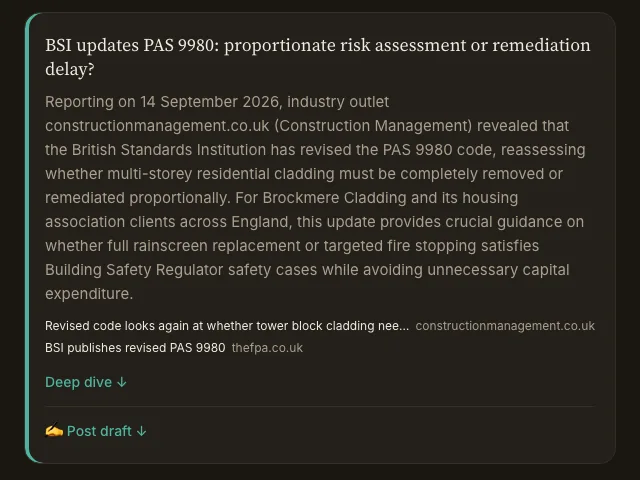
Every part of the brief, explained once, with the card the real example brief holds for it beside the words. Nothing on this page is a drawing of the product.
What arrives
Eight parts, and what each one is for.
The same shape every morning. Beside each part is the card the example brief on this site actually holds for it, generated for an invented company on a real morning.
Up to three ideas worth posting, ranked, each with the hook, why it matters now, and a draft you can edit.
The trade press and the market signals behind it, with the number and the publisher on the card.
Empty in this example
The rest of the brief's parts. That morning produced nothing worth a card in them, so they are not there: a brief leaves a part out rather than filling it.
Two or three sentences at the top: what today is about, so you know in ten seconds whether to read on.
What the authorities in your field published, read in full when it matters: what changed, who it affects, and why it may matter to you.
Requirements, reporting and the research the people who buy from you care about.
What is coming up in the calendar, and what other people in your field are doing well enough to borrow from.
What is catching on right now, picked for an honest bridge to your field rather than for the noise around it.
When there is nothing worth saying, the brief says so and gives the reason, instead of filling the page to look busy.
A part with nothing worth saying stays empty. That is the whole difference between a brief and a content calendar.
How it is made
Set it up once. After that it does the research for you, every night.
Ten minutes of your time, and only the first time.
-
 1
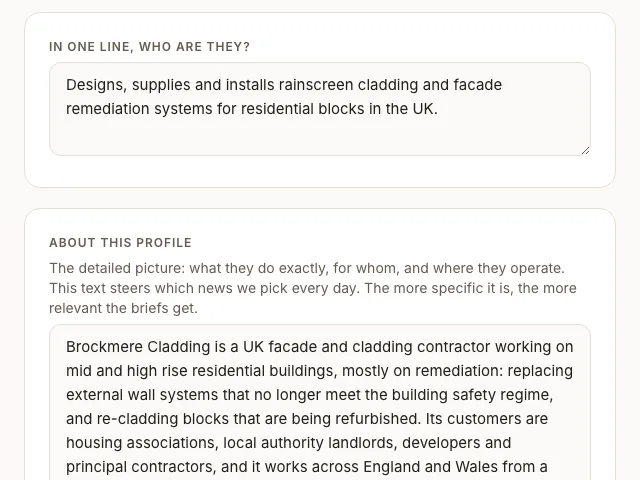
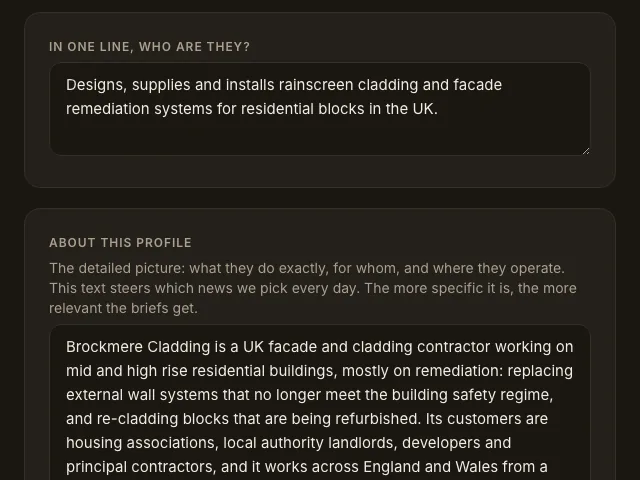
1We read your website and write the profile.
It decides which news counts as yours, so you read it once and correct anything that is not right.
-
 2
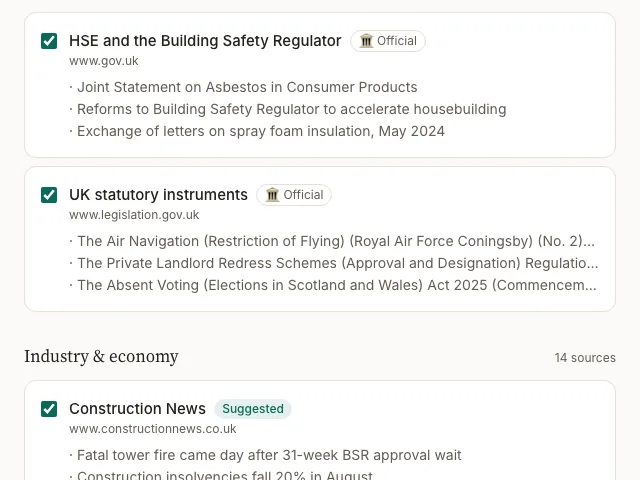
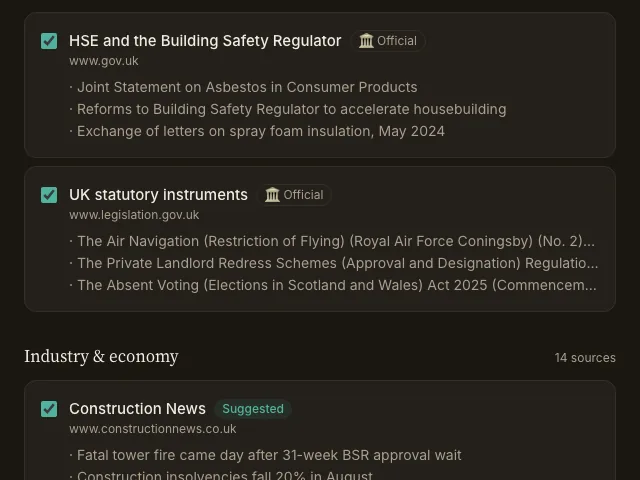
2You choose the sources you want to follow.
Authorities, the trade press, and the searches that catch the rest. Each one shows what it published today, so you can see what you are choosing.
-
 3
3The brief arrives before you start work.
Every card names its publisher, carries its date and links to the article, so you can check it before you post.
After those ten minutes it runs by itself: it reads overnight, and the brief is in your inbox in the morning.
What it does not do
Three things it will not do, on purpose.
It does not publish.
It never has access to a channel of yours. You copy the draft and post it yourself.
It does not say you comply.
Whether a rule applies to you, and whether you meet it, is yours to decide. It explains the rule and points at the source.
It does not promise to be right.
Every card is built on what its sources published, but an AI can still misread a source. That is why every card links to it, so you can check before you post.
A tool that claimed none of this could go wrong would be easier to sell and worth less to trust.
Your language, your market
It reads across languages and writes in yours.
The sources that matter where you operate, in the markets you name, written back in the language your audience speaks. National law follows the country a profile is actually based in, so a British company is not handed Swedish law.
Not sure yet? Book a demo and Therese walks you through one.