
One brief. Many hands.
A chat assistant gives each person a private conversation. Therese AI gives the team one morning meeting: the same angles, who takes which, a second pair of eyes before it goes out, and a profile of its own for anyone on the team who posts under their own name. What one of you learns, all of you keep.
Not sure yet? Book a demo and Therese walks you through one.
Five ways to work on it together.
Here is where in the product each one happens.
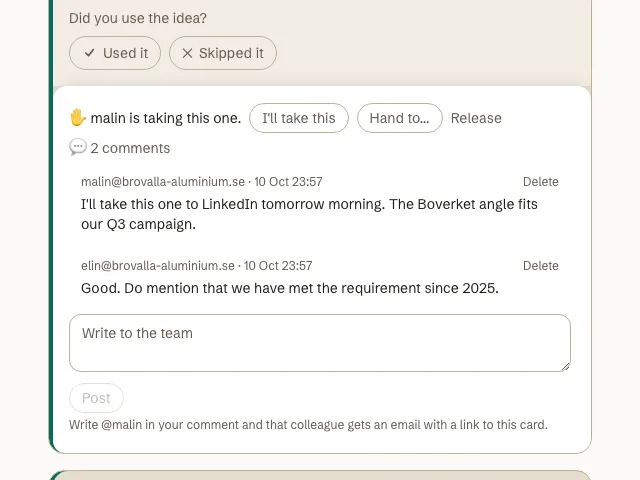
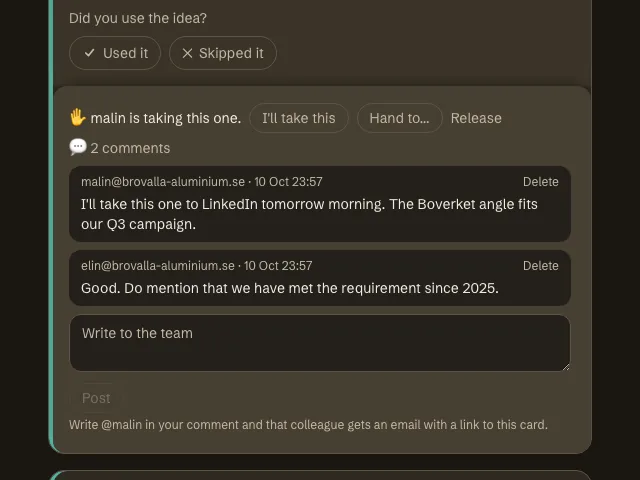
Everyone sees who has which story
Every angle in the brief can be taken. Everyone sees who has it, and the morning email says how many are still open. Hand one to a colleague, or ask in the thread under the card. The person you name gets a link straight to it.
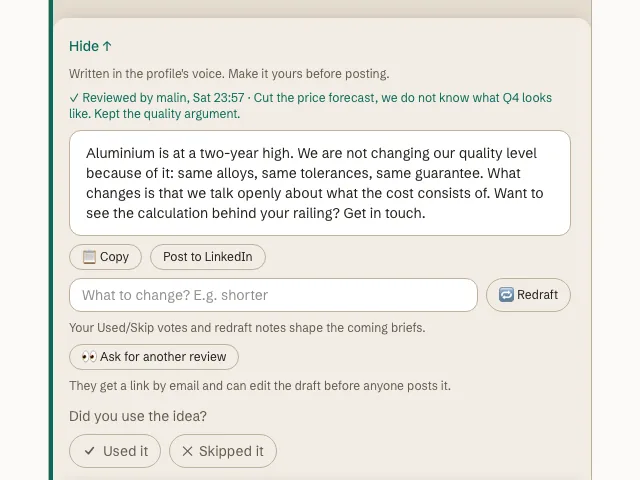
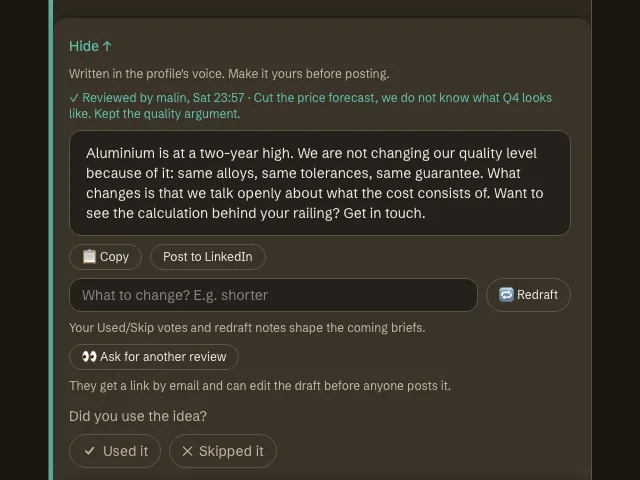
A second pair of eyes, without another tool
Ask a colleague to review a draft. They edit it in place, leave a note and mark it reviewed, and their text becomes the draft everyone sees. On a regulatory card, a named person can mark it checked against the official source. It is the trail you want when someone asks who looked at this.
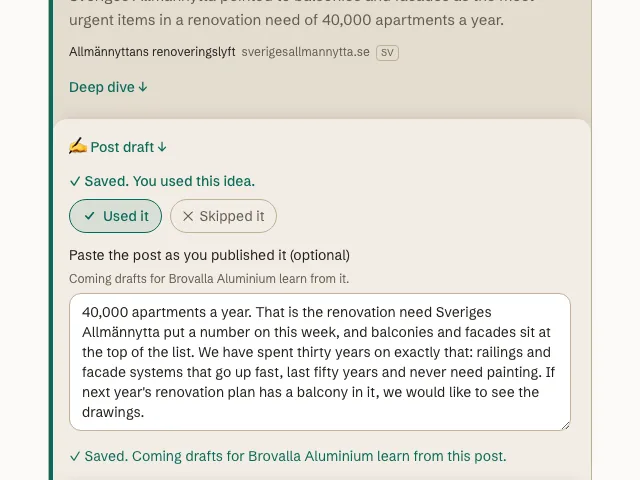
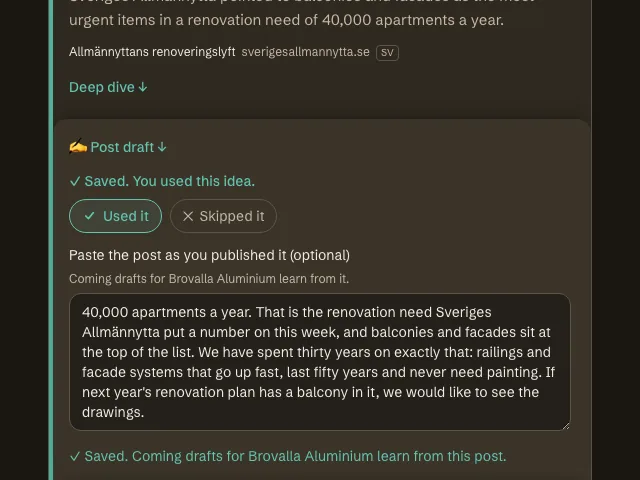
Drafts that learn how you write
A profile has one voice, learned from the posts it publishes. Mark a card as used, paste the post as it went out, and the next drafts learn from it: your length, your openings, the words you use and the ones you avoid. A founder or a specialist who posts under their own name gets a profile of their own, its own brief, its own drafts, its own voice, beside the company's.
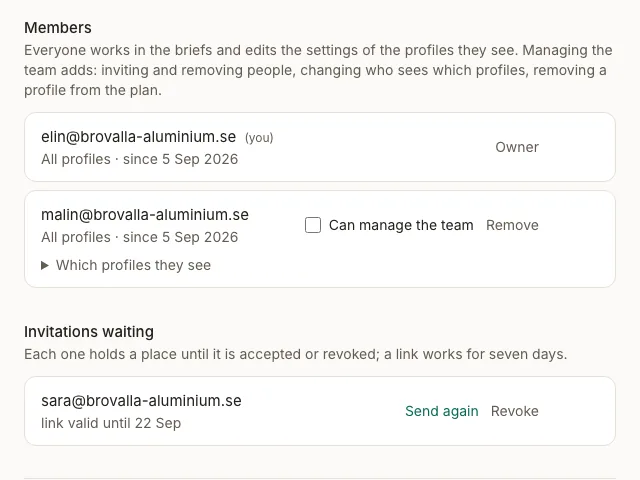
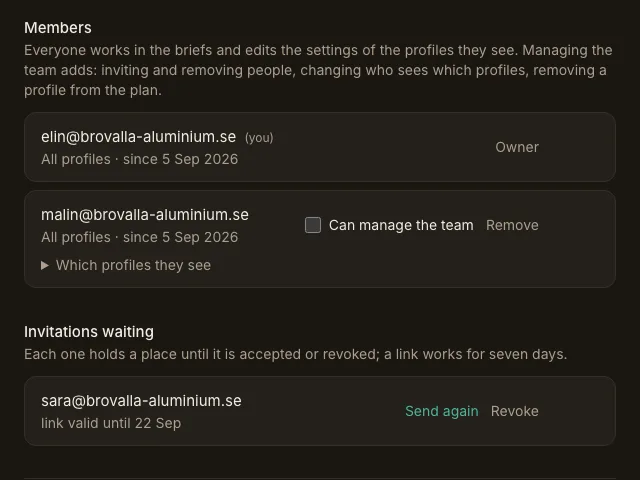
One memory per profile, everyone teaches it
Used, skipped and why, the posts you publish, the notes you leave: from every member, into the same profile. A new colleague inherits everything the team has taught. What someone taught the team stays when they leave, and they are logged out the moment you remove them.
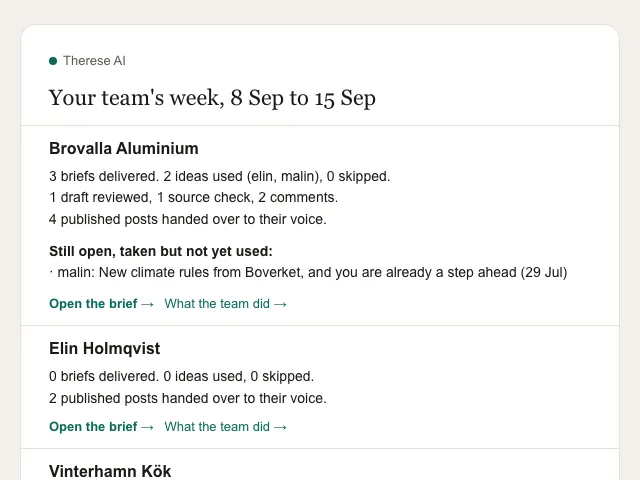
Where the team already reads
Every member gets the brief in their inbox, or not, as they choose. And on Monday, one email per person: what the team used and skipped, what is still open, who reviewed what, and the regulation taking effect in the next 30 days.
Nobody has to ask who is doing what, and nobody has to remember what was decided.
Built for the teams that actually exist.
Not an org chart. The three arrangements people actually turn up with.
The marketing lead and the founder who posts
One team, two profiles. The lead runs the company page; the founder has one of their own, with a brief in their own voice.
The agency
One team, many profiles. A writer sees only the profiles you give them; the client contact gets the brief by email without a login.
The founder and the freelancer
No shared password. The freelancer works in the brief with their own login and is removed the day the engagement ends.
Everyone has their own login, so nobody needs to share a password, and removing someone ends their access at once.
Read a real one, or let Therese walk you through it.
The whole example brief is on this site, with nothing taken out, and the demo is a conversation rather than a form to fill in.
Not sure yet? Book a demo and Therese walks you through one.